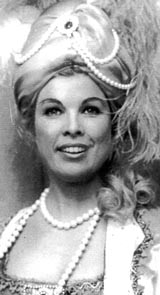
Strauss' "Four Last Songs"
To my way of thinking, the famed Strauss "Four Last Songs" are beautiful in any order, but, what with their order always programmed after an order created by publisher Boosey & Hawkes, and-contrary to popular belief-not an order dictated by Strauss, I find more interest and vocal variety can be gathered if one sings them out of the standard order. A little innovation is welcomed by listeners, providing, naturally, one can sing them naturally!
Recent Focus on Franz Schubert
I hadn't sung Schubert in a while, but, in again "warming up" some of Schubert's greatest songs for recital, I found myself saying out loud that, "Schubert's songs were shaping forces of their Romantic Era, not just reflections of it."
Schubert had the self-esteem to respond to a variety of poets' works, which interested him, often engaging personal friends as well as famed poets for his songs.
Generally, no matter what poet or thematic content-though there are certainly exceptions to this-, Schubert didn't write well for the female voice, particularly voices of size. He wrote for men, so, in order to find the necessary 'Schubertian tone', I've always spent time focusing on "scaling down", to create the appropriate color. It hasn't been worth it to me, as other composers, though demanding, didn't require such a straight jacket. Recently, though, I've exercised the same process and it's been a journey worth all effort.
Excitement
A big excess of emotional excitement can harm rather than help performance, simply because the excess is inappropriate to the demands of the situation. A situation may not warrant so much emotional excitement. It cannot be creatively used and jams performance, resulting, likely, in the jitters.
Donizetti's "La Fille du Régiment"
At the premiere, Gaetano Donizetti's opera "La Fille du Régiment" (Daughter of the Regiment) was such a success with the French that it was, for many years, performed every Bastille Day in France. This was a huge honor for an Italian born composer.
Donizetti succeeded in winning the French with this opera-his first Opéra Comique-, which was his main objective with "La Fille du Régiment." He was willing to bend the French Opéra Comique rules of style, slightly, in order to appeal to his French public. Needless-to-say, he accomplished his goal. It pays to take risk if you believe in an idea!
Composer Egon Wellesz Reflects on Pietro Cavalli
Giving the voice individuality was something not yet touched upon up to Monteverdi's time. Pietro Cavalli, a student of Monteverdi, first wrote words in a dramatic style and gave the vocal line an independent life of its own, creating vocal personality. This was at the end of the 1600's and completely new to musical writing, marking the real beginning of "bel canto." This is not to be confused with the "Bel Canto Era" (1810 to 1830), involving a style and a vocal technique in addition, but it indicates that attention to the voice as an instrument started in the Baroque Era.
Egon Wellesz, composer of the Second Vienna School, "atonality" and later "twelve tone writing" (1903-1925), who studied Byzantine and Baroque elements, reflected on Cavalli saying:
"Cavalli, who first wrote independent vocal line, is to Monteverdi as Strauss to Wagner...Monteverdi had the brilliance, but Cavalli the genius!"
"The Life of Maria" - Rilke, Hindemith, Marsh
My intent with my translation of Rainer Maria Rilke's "Das Marienleben" (The Life of Maria), for the Austrian Cultural Forum in New York, has been immediate text comprehension.
"Das Marienleben" is one of the most difficult and most intoxicating poetic works. One can discuss the meanings of Rilke's poetry indefinitely, which is part of his charmed genius, but when the massive complexities of Paul Hindemith's composing are added to this, it can be overwhelming to listeners, particularly at first hearing.
My objective has been to alleviate the obscure use of the German language and open it to immediate understanding, while still staying very close to Rilke's text intent. A public needs to "get" the words immediately, so Hindemith's powerful musical concept can also be enjoyed.
Bel Canto
Let's talk about "Bel Canto."
Aside from the "Bel Canto Era" and the "Bel Canto Style" of opera, there is also a "Bel Canto Method" of singing, which can be used even in Verismo, Wagnerian, Verdian, and Modern styles.
Rossini's Masterpiece, "Il barbiere di Siviglia"
In Rossini's day, it was considered a matter of pride just how fast one could turn out a masterpiece. It is said that Rossini wrote Il barbiere di Siviglia
in 20 days. Rossini claimed 11 days.
Years later when Donizetti was asked, he replied, "I believe he wrote it in 20 days. We all know how lazy he was!"
Language Adoration
I simply adore languages. All those words! It's like having your choice of anything
and everything in the best bakery, all at once!
Anthology en Route
In creating "singing translations" and Russian transliterations for my upcoming international anthology, I wrote a draft of encouragement to anyone using the anthology, that for phonetic languages-where you write as you speak, like Russian, Italian, German, as examples-, once the phonetics and/or alphabets have been learned and digested, spelling problems should be practically non existent. A reason to feel rejoice, because then it all becomes fun. Like learning lines for a play!

|